
Why Your Landscaping Facebook Ads Attract Price Shoppers
Are your landscaping Facebook ads attracting homeowners who want a $50,000 backyard project on a $5,000 budget? That mismatch creates more than an awkward conversation about pricing. Your team spends time calling leads, discussing ideas, and preparing estimates for projects that never had a realistic chance of moving forward. Meanwhile, the homeowners who could afford your work may see little reason to choose your company. Before increasing your advertising budget, examine what your campaigns communicate and which actions they encourage. Lead quality depends on your offer, campaign setup, tracking, creative content, and overall brand presentation. At Savant Marketing, we recommend reviewing these five areas together because each influences the expectations homeowners bring into your sales process. The goal is to generate inquiries from people whose project, budget, location, and expectations fit the work you want to sell.
1. Your Offer Attracts Homeowners Who Prioritize Price
Your advertising tells homeowners what they should value about your business. If your headline promises the cheapest patios in town, price becomes the main reason to contact you. That message can attract people who compare contractors primarily by their estimate totals. A homeowner considering a substantial outdoor renovation needs other reasons to trust your company. They may care about drainage, installation quality, design guidance, communication, and how the finished space supports their family. Your messaging should explain those benefits through specific details about your work. For example, describe a backyard with space for family dinners, comfortable seating, and a layout that connects the house to the pool. Give homeowners a reason to discuss the finished result before they ask about discounts.
Your photos and videos need to support the same message. If you want complete backyard renovations, an advertising portfolio dominated by small repairs sends the wrong signal. Show completed projects with the scope, materials, and features you want future customers to request. Include wide views that establish the overall project and closer footage that demonstrates installation details. If you lack that portfolio, consider documenting a suitable project at your own property or a carefully selected portfolio project with clearly agreed pricing. Label design concepts and renderings accurately so homeowners understand what represents completed work. Present your team professionally through clean branded clothing, organized job sites, and clear explanations of your process. The homeowner should see evidence that your company can manage the type of investment your advertising describes.
Promotional offers can support this positioning without making discounts the central attraction. A preliminary design concept, for example, can help a qualified homeowner understand possible layouts before committing to detailed design work. Define its limits clearly because a rough concept differs from measured plans, construction drawings, or permit documentation. An extended workmanship warranty can also matter when its coverage, exclusions, and service process are clearly explained. Another option is a defined period of post-installation care for planting or other appropriate project elements. Calculate the delivery cost before including any additional service in your offer. Avoid assigning an inflated dollar value to something you would never normally sell at that price. Choose an offer that addresses a real concern, supports your margins, and helps homeowners evaluate the project with greater confidence.
2. Your Campaign Objective Encourages the Wrong Action
Meta offers different ways to collect inquiries, and your campaign settings influence the action its delivery system pursues. A campaign focused on conversations seeks people likely to start a conversation, which does not establish their project budget. Messaging can work when your team qualifies inquiries promptly, but inexpensive messages alone do not prove the campaign is successful. Under a lead generation setup, you can collect inquiries through an instant form or direct people to a website form. These are different lead collection routes, rather than three completely separate campaign objectives. Meta’s lead generation guidance distinguishes between collecting leads and using conversion lead settings with CRM feedback to pursue lead quality. Select the setup that matches the customer action you can measure and support consistently. Then judge its performance by qualified opportunities and sales outcomes rather than the cheapest initial interaction.
The questions you ask can make the difference between a contact record and a useful sales inquiry. Start with the information your team actually needs to determine whether a conversation makes sense. For a design-build contractor, that might include project location, requested work, expected investment, and preferred timing. If your projects begin at $30,000, state that clearly and ask whether the homeowner is comfortable considering that investment. Use budget ranges that reflect the work shown in the ad instead of offering unrealistic choices. A website form gives you room to explain your process and show supporting projects before someone submits an inquiry. An instant form keeps the submission process convenient, so its questions need particular attention. Our discussion of
Facebook advertising strategy for landscapers provides related context, but your own qualified lead results should determine which route you keep.
3. Your Tracking Treats Every Inquiry as Equally Valuable
A form submission tells you that someone completed a form, but it does not confirm that they can afford your work. If your reporting counts every submission as the same successful outcome, important differences disappear. Consider two homeowners who each request a backyard consultation through the same campaign. One owns a property inside your service area and expects to invest $75,000 in a complete renovation. The other lives outside your territory and wants a small repair below your minimum project size. Your CRM should record those differences through consistent qualification criteria and clear sales stages. Where supported, an appropriate CRM connection can send later sales events to Meta through the Conversions API. Meta’s guidance describes this approach as a way to provide feedback about leads more likely to convert, rather than relying solely on submissions.
For website forms, make sure the conversion event reflects the action you actually intend to measure. You might record all submissions separately while reserving a qualified inquiry event for people who meet your stated criteria. If your form routes unsuitable inquiries to another page, that page does not automatically tell Meta why someone failed qualification. The event configuration and any connected CRM feedback need to match your intended reporting. Similarly, conditional form questions can help prevent unsuitable submissions where the available form settings support that behavior. Test the full process so qualified homeowners register correctly and unsuitable inquiries do not trigger the same success event. Do not assume that a history of poor leads means your pixel is permanently damaged or requires a new advertising account. Review the offer, event setup, qualification rules, and available feedback before considering a replacement.
4. Your Ad Creative No Longer Holds Attention
Even a strong advertisement can become less effective as the same audience sees it repeatedly. Homeowners who were interested may have already responded, while others stop paying attention to familiar footage. This is commonly described as ad fatigue, but declining results alone do not establish the cause. Seasonal demand, competition, response times, and changes to your offer can also affect performance. Review several indicators together, including frequency, click-through rate, cost per inquiry, and the percentage of inquiries that qualify. If engagement weakens while qualified opportunity costs rise, new creative is worth testing. Avoid assuming that Meta deliberately starts sending poor leads because an advertisement has become familiar. Treat creative fatigue as a possible explanation to investigate through results and controlled changes.
Build a regular process for collecting new project footage instead of waiting until campaign performance declines. At each suitable job, capture the original space, installation progress, finished result, and a clear explanation of the homeowner’s priorities. Turn that material into different advertisements with distinct opening lines and reasons to keep watching. One video might explain how the design improved access between the house and outdoor dining area. Another might show how your crew addressed a slope or drainage issue before installing the patio. Review your creative every two to four weeks, while keeping effective ads running when their results remain strong. The right number of active ads depends on your budget and whether each receives enough delivery to evaluate fairly. A smaller selection of clearly different advertisements can provide better information than many nearly identical versions sharing limited spending.
5. Your Online Presence Sends Conflicting Messages
Your Facebook advertisement may be the first interaction with your business, but homeowners can investigate further before contacting you. They may visit your website, review recent social posts, read customer feedback, or compare your project gallery with another contractor’s work. An ad featuring a complete outdoor renovation loses credibility when the website barely mentions installation projects. Old promotions, unclear service descriptions, and a portfolio dominated by unrelated work can create the same problem. Start your review with the pages and profiles a prospective customer is most likely to find. Check whether they consistently explain your preferred services, service area, project standards, and process. Our article on costly marketing mistakes landscaping companies make discusses the broader role of positioning and brand presentation. Use that review to identify specific gaps between what your advertisements promise and what the rest of your online presence demonstrates.
Clear pricing information can support your positioning when it sets realistic expectations about scope. Publishing a starting investment does not automatically make your company look cheap or attract price shoppers. A page explaining that complete backyard projects typically require a substantial budget can help unsuitable prospects recognize the mismatch earlier. Explain what affects the price, including access, excavation, drainage, material selection, structures, and project complexity. Support those explanations with relevant completed projects and accurate descriptions of what each involved. Customer reviews and case studies can add evidence about communication, workmanship, scheduling, and the overall experience. Remove outdated claims and promotions that conflict with the services you currently want to sell. Every part of your online presence should help a homeowner understand whether your company fits their project before requesting an estimate.
Final Thoughts
Improving landscaping Facebook ad lead quality requires more than changing targeting or adding another form question. Your offer needs to attract the right expectations, and your portfolio needs to demonstrate the work you want. Your campaign setup should pursue a useful action, while your tracking distinguishes submissions from qualified opportunities. Fresh creative gives you new ways to communicate your strengths, and consistent branding supports the claims made in your ads. Measure the combined result through qualified inquiries, attended appointments, estimates, signed projects, and gross profit. As a hypothetical example, 40 inquiries at $50 each cost $2,000, but only four qualified inquiries produce a $500 cost per qualified opportunity. Twenty inquiries at $80 each cost $1,600, and eight qualified inquiries reduce that figure to $200 despite the higher initial lead cost. Those numbers make the priority clear: evaluate your advertising by its ability to generate suitable project opportunities and profitable work.

Ready To Take Your Business To The Next Level?
If you’re struggling to DIY your marketing, or you're tired of working with agencies that don’t really understand your business—or worse, don’t seem to care—then maybe it’s time for something different.
Book a quick call with our team. We’ll take the time to understand your unique goals, challenges, and market… and give you a clear, customized strategy to help you grow faster and more efficiently.
No pressure. No sales pitch. Just real insights you can use—whether we work together or not.
Book your free strategy call now.
Download Our Free Case Study
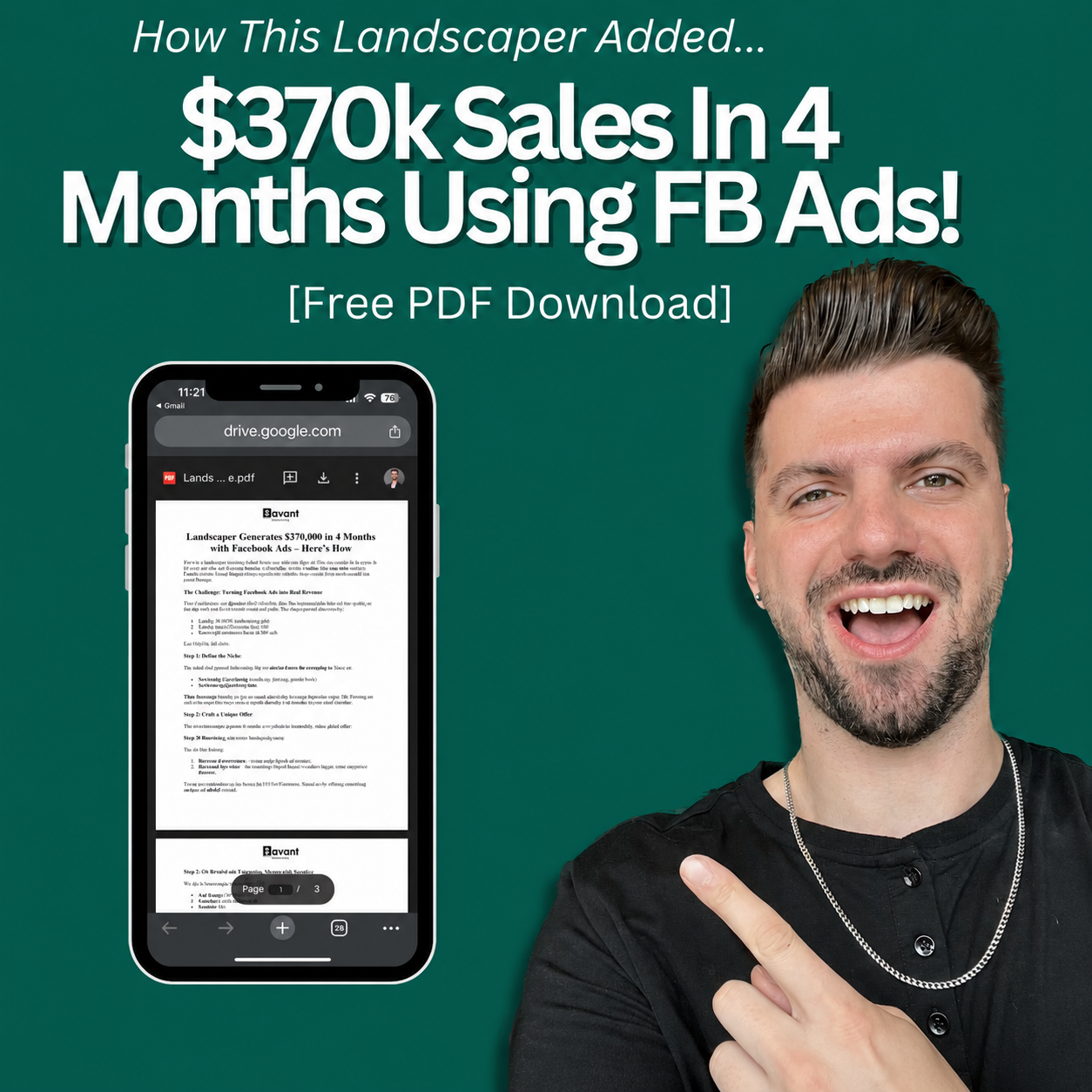
Discover the exact Facebook Ad copy, offer, and creative we used to help our client generate $370,000 in only 4 months.