Why 90% of Landscaping Facebook Ads Fail in 2026 (After $5M+ Spent)
If you run a landscaping or outdoor living company and Facebook ads have not worked the way you expected, you are not alone. Some companies get no leads at all, even with a decent budget.
Others get leads that never answer the phone. Some book estimates but struggle to close jobs once they are face to face with the homeowner. In most cases, the problem is not Facebook. The problem is the structure of the campaign and the systems sitting behind it.
We are going to walk through the seven biggest mistakes landscapers make with Facebook ads, then show you the fixes that create a clear road map from ad click to booked estimate to closed project. This is written for landscapers who want consistent opportunities, not random spikes of activity followed by dead weeks.
Mistake 1: Targeting an Audience That Is Too Small or Too Large
Audience targeting is the base layer of every Facebook ad campaign. When this is wrong, even a great video and a great offer will struggle. The most common issue we see is landscapers targeting a service area that is either too tight or too wide, then wondering why the results are unstable. If you target too small of an area, Facebook ends up showing your ad repeatedly to the same small group of people. If those homeowners were not interested the first few times, blasting them with more impressions usually does not change the outcome. It just drives up your cost and creates fatigue.
On the other end, some landscapers target an extremely large area because they think more reach equals more leads. But if your monthly budget is limited, a huge audience works against you. Facebook cannot show your ad frequently enough to the same people to build consistency and learn who your ideal buyer actually is. A better starting point for most campaigns is an audience size around one million people. That is usually large enough to avoid fatigue, but not so large that your budget gets diluted.
Once the size and geography are in the right range, you can improve quality by adding filters. Interest-based targeting can help when it is used with restraint, especially if you choose signals tied to homeowners who invest in their property. A stronger option, when available, is using your own data. If you have a list of roughly one thousand past customers or leads in your CRM, you can upload that list to Facebook and build a lookalike audience. This helps Facebook find new prospects who resemble the people who have already paid you or seriously considered your services.
Mistake 2: Weak Hooks That Do Not Stop the Scroll
Even if your targeting is solid, your ad still has to earn attention. The hook is the first sentence, the first visual, or the first few seconds of the video. If that part fails, your offer never gets heard. Many landscaping ads use vague language that sounds nice but does not create relevance. Homeowners are scrolling fast. They are not looking for catchy slogans. They are scanning for something that feels like it applies to them, right now, in their area, for their type of property.
The easiest way to fix this is to write hooks that are simple and direct. Call out the audience and the outcome. Then tell them what to do next. A practical structure we like is the if-then statement. If you are looking for X, then do Y. That could sound like, “Homeowners in Toronto, if you want to upgrade your backyard for summer, read this,” or “If you want a backyard built for entertaining, request a quote here.” The point is not to be clever. The point is to be understood instantly. When the hook is clear, the right people keep watching, and the wrong people self-select out.
Mistake 3: Choosing the Wrong Creative Format
Facebook gives you multiple formats and placements, but not all of them perform the same. Right now, short-form video in the Reels placement consistently produces stronger results for most local service businesses, including landscapers. People consume short videos constantly, and Facebook prioritizes content that keeps users engaged. If you are still relying only on polished image ads, you are often competing at a disadvantage.
The fix is not to hire a production crew. The fix is to create authentic videos that do not feel like ads. Film vertically on your phone. Keep it one to three minutes. Introduce who you are, what you do, who you help, and what the next step is. The goal is to look like a real contractor talking to a homeowner, not a commercial. When the video feels real, trust goes up, and when trust goes up, lead quality tends to rise with it. This also gives you a format you can create quickly, test often, and improve over time without massive cost.
Mistake 4: Selling Services Instead of Outcomes
A lot of landscapers think the offer is the service. Patios. Pavers. Turf. Decks. Planting. Those are deliverables, but they are not the reason a homeowner buys. Homeowners buy outcomes. They want a yard they are proud of. They want a space that makes it easier to host family and friends. They want to feel like their backyard is an extension of their home. When your ad talks only about the mechanism, you train people to compare you to the next company on price and features.
The better approach is to lead with the result. Talk about what changes for the homeowner after the job is done. Talk about the lifestyle benefits and the usability of the space. You can still mention the service, but it should support the outcome, not replace it. This shift matters because it changes the type of prospect who responds. When you speak to outcomes, you attract homeowners who care about the project, not just the cheapest quote.
This is also where many landscapers misunderstand promotions.
A promotion does not have to be a discount. In many markets, discounts attract low-intent shoppers and create price pressure. Instead, use promotions that signal quality and filter for better buyers. Free design consultations work well for outdoor living and design-build projects because they attract homeowners who value planning and execution. Extended warranty offers can work well because they demonstrate confidence and reduce perceived risk. These promotions help you stand out without training the market to wait for a sale.
Mistake 5: Calls to Action That Create Confusion or the Wrong Level of Friction
If you want leads, you must tell people exactly what to do next. Many ads fail because the call to action is vague. Phrases like “reach out” or “contact us” sound friendly, but they do not create clarity. The homeowner should not have to guess what the next step is or how to take it. A strong call to action is specific. Click the button below. Request a free quote. Fill out the short form. We will contact you within a set timeframe.
The second part of the call to action is friction. Too much friction kills volume. Too little friction kills quality. Sending a homeowner to a long website form with a pile of questions is often too much friction, especially on mobile. On the other side, messaging ads can be too easy and produce accidental clicks and low commitment leads. The middle ground is usually a Facebook lead form that asks for the basics and includes one or two short questions that improve intent without making the process feel like work. The goal is not the most leads. The goal is leads that can realistically turn into booked estimates.
Mistake 6: Running Too Small of a Budget or Guessing the Number
Facebook ads need enough budget to generate data and stabilize. If your spend is too low, performance becomes inconsistent because Facebook cannot collect enough conversion signals to learn. As a baseline, if you cannot allocate at least $1,500 per month to Facebook ads, it is usually better to wait and focus on other channels until you can. Small budgets tend to produce small sample sizes, and small sample sizes lead to random outcomes.
Instead of guessing your budget, work backward from your goals using simple math. We often use a planning approach where roughly 50 percent of leads book an estimate and roughly 30 percent of estimates close into a project. Your numbers may differ, but this gives a starting point. Pair that with a realistic cost per lead, often somewhere in the $20 to $50 range depending on market and offer. If you know your average project value and how many projects you want to close, you can calculate how many estimates and leads you need, then calculate the ad budget required to create that lead volume. This turns ad spend into a planned investment rather than a monthly guess.
Mistake 7: Not Building the Bridge Between Lead and Appointment
This is the one that frustrates most contractors because the ads appear to be working on the surface. Leads are coming in, but the calendar is not filling up, or the close rate is not improving. In many cases, the issue is what happens after the lead submits their information. We call this the bridge. It is the process that converts a raw lead into a booked appointment and a qualified opportunity.
The first part of the bridge is speed to lead. The faster you contact a lead, the more likely you are to book them. Ideally, you call within minutes, not hours, and definitely not days. If you cannot do that consistently, a CRM helps because it can trigger immediate texts and emails that confirm the request and prompt the homeowner to reply. A CRM also prevents leads from getting lost when you are busy on job sites or managing crews.
The second part of the bridge is qualification. Most landscapers waste time driving to estimates for people who are not serious, do not have the budget, or are just collecting prices. A short discovery call, often ten to fifteen minutes, can solve this. The goal is to understand their timeline, their vision, their decision process, and whether they have realistic expectations on cost. This does not need to feel like an interrogation. It is simply a professional step that protects your time and increases close rates by ensuring you show up to the right opportunities.
Final Thoughts
If Facebook ads have not worked for your landscaping or outdoor living company, it is usually not because your market is broken or because homeowners are not spending. Most of the time, the campaign is missing one or more structural pieces that turn attention into real opportunities. When targeting is wrong, you either burn out a small audience or spread your budget too thin to build consistency. When the hook is weak, the right people never stop long enough to hear the message. When the creative format does not match how people consume content, your ads blend into the feed and get ignored. When the offer focuses on services instead of outcomes, you attract price shoppers and train homeowners to compare you to every competitor on cost.
The other half of the equation is what happens after the click. Clear calls to action reduce confusion, and the right level of friction filters for homeowners who are actually ready to move forward. A planned budget based on your revenue goals creates stability, which is the difference between random weeks and predictable lead flow. And most importantly, the bridge between lead and appointment determines whether your ad spend turns into booked estimates or turns into a spreadsheet full of names that never convert. Speed to lead, a CRM that keeps you organized, and a short discovery call before sending a crew out are not small details. They are the difference between a campaign that looks good on paper and a campaign that produces real projects.
When all seven pieces work together, Facebook ads stop feeling like gambling. You are no longer guessing why the phone is quiet, why leads are ghosting, or why your calendar is empty during weeks when you should be busy. You are running a system that creates attention, filters for the right homeowners, and moves them through a process that makes it easy to book, qualify, and close. That is when the marketing starts to feel dependable, and that dependability is what gives you the confidence to plan production, hire good people, and grow without constantly worrying about where the next job is coming from.

Ready To Take Your Business To The Next Level?
If you’re struggling to DIY your marketing, or you're tired of working with agencies that don’t really understand your business—or worse, don’t seem to care—then maybe it’s time for something different.
Book a quick call with our team. We’ll take the time to understand your unique goals, challenges, and market… and give you a clear, customized strategy to help you grow faster and more efficiently.
No pressure. No sales pitch. Just real insights you can use—whether we work together or not.
Book your free strategy call now.
Download Our Free Case Study
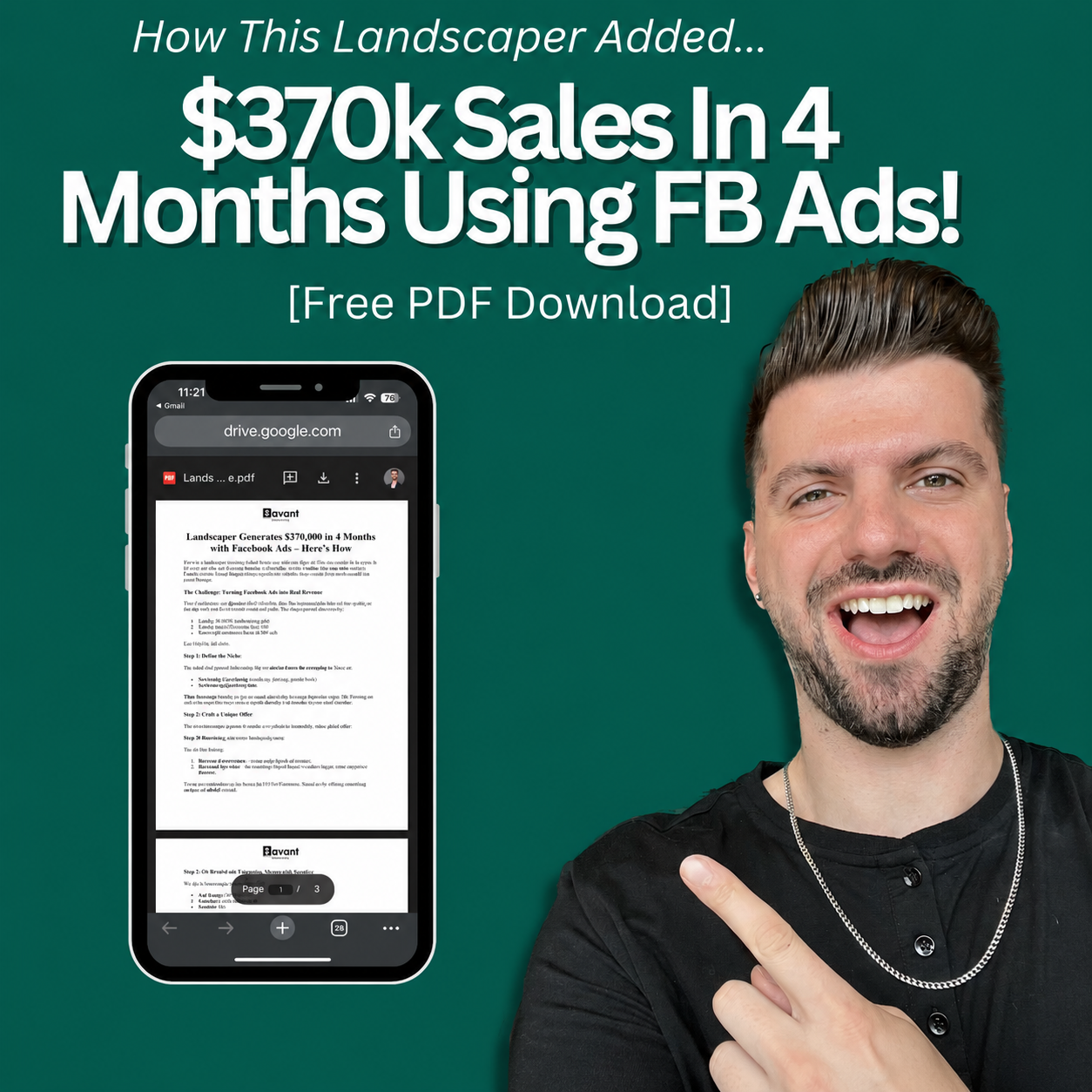
Discover the exact Facebook Ad copy, offer, and creative we used to help our client generate $370,000 in only 4 months.